Ground Ball Fielding Routine: From Roll to Throw
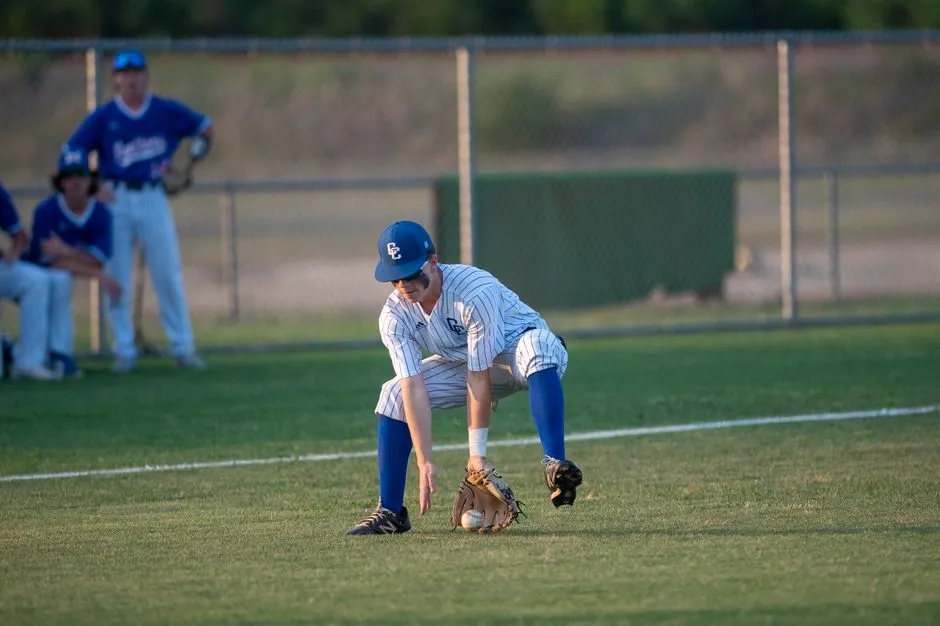
Progress from predictable rolls to one clear throw
Use four stages for ground-ball practice: five self-rolls, five partner rolls straight at the fielder, five rolls one step to either side, and five field-and-throw repetitions. Keep the ball in front, present the glove low, secure it, move the feet, and throw only after the fielding pattern stays controlled.
Those cues are a starting framework. Position, hop, game situation, player body, and coaching system change technique. A shortstop charging a slow roller does not need to impersonate a statue built for the first drill.
Prepare a controlled fielding lane
Use a flat, dry, permitted surface with adequate runoff and no hidden holes, sprinkler heads, equipment, or bystanders. Inspect balls, gloves, footwear, bases, and target. Space stations so errant throws cannot enter another drill.
Beginners may start with a softer training ball appropriate to their age and league environment. Protective equipment and supervision should follow league, facility, coach, and product guidance. Stop for lightning, dangerous heat, poor visibility, or unsafe footing.
The defense-work guides never use surprise bad hops to “toughen up” a player. Predictability earns the right to progress.
Stage 1: five self-rolls
Stand in a balanced ready position. Roll the ball a few steps forward, move behind its path, lower the glove toward the ground, and receive the ball in front of the body. Bring the throwing hand toward the glove, secure the ball, and stand under control.
Do not throw yet. The goal is to connect approach, glove presentation, catch, and secure transfer. Reset fully between repetitions.
Use this observation list:
- First step moves toward the ball's path
- Feet remain active rather than planted too early
- Head and eyes stay directed toward the ball
- Glove approaches from low enough to block a miss in front
- Throwing hand joins without slapping or trapping blindly
Different coaches use terms such as funneling, gathering, or working through the ball. Choose one cue and define what the player should do, not just what the word sounds like.
Stage 2: five direct partner rolls
The partner rolls from a short, safe distance at a predictable speed. The fielder begins in ready position, reads the ball, takes the necessary steps, and fields it. Return the ball by walking or a controlled toss only if the space and skill make that safe.
The roller should aim for clean hops, not test courage. Adjust distance and speed until the fielder can repeat the pattern. Increase only one variable at a time.
If the ball repeatedly passes between the feet, examine approach timing, glove height, and whether the player stops too far from the ball. Avoid shouting all three corrections during the next roll.
Stage 3: five one-step lateral rolls
Alternate a roll one comfortable step to the forehand side and one to the backhand side, for five total. The player moves the feet first and keeps the ball in front when possible.
Do not demand a dramatic backhand before ordinary lateral movement is comfortable. A qualified coach can introduce forehand and backhand angles with appropriate glove orientation. Young or new players benefit from success at modest range before speed expands.
Score only fielded in front or needs adjustment. Avoid comparing players whose positions, experience, or bodies differ.
Stage 4: five field-and-throw reps
Add a safe target and receiver. Field a direct or modest lateral roll, secure the ball, move the feet toward the target, and make a controlled throw. Start at short distance and moderate effort.
The receiver must be looking and ready. No one crosses the throwing lane. Use a screen or designated coach target when appropriate. Stop immediately for arm pain, loss of control, or fatigue that changes throwing mechanics.
Throwing workload includes warm-up, drills, games, pitching, and informal play. The routine's five throws are not permission to ignore total volume or medical and league guidance.
Review the sequence, not only the error
After twenty fielding reps, identify where the pattern first broke: approach, glove position, secure catch, transfer, feet, or throw. Correct the earliest failure rather than blaming the final result.
Pair this work with the three-round batting tee routine only when the space has separate active lanes and players receive rest, water, and supervision. Rotate small groups rather than creating a long line where attention cools faster than the infield dirt.
Finish with two easy, direct rolls and no throw. Ending on a clean fielding action gives the next session a clear place to restart. The bucket can remain half full. It will not tell anyone.